You
might be surprised to learn that Halloween actually sprung from a
festival the Ancient Celts, fearful of dying during long, frigid
winters, would perform on the eve of November 1st. This was the night
considered the end of Summer and beginning of Winter and the bridge
between the living and dead. Village folk lit bonfires, sacrificed
animals to deities, and wore animals skins and masks to disguise
themselves from visiting ghosts and ghouls. The bonfires attracted bugs
which in turn attracted bats which is why bats are still symbolic of
this day.
Over the centuries the pagans held festivals
to celebrate the Roman harvest on "All Saint's Day" or "All Hallows
Eve". On All Hallows Eve children and the poor would go door to door
"soulling" singing and saying prayers for the dead. In exchange for
their prayers they were given soul cakes or Harcakes. Each cake
represented a soul being freed from Purgatory. As wandering at night was
dangerous with little light to guide their way, the beggars would take
caution to avoid walking under ladders in case one were to fall or to
step on cracks which could result in a nasty spill. People started to
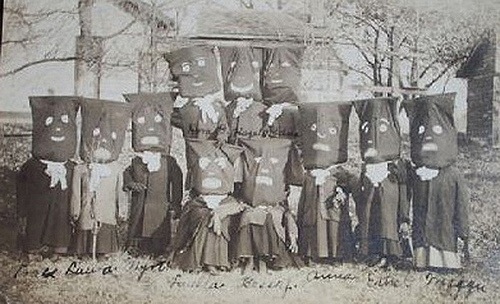
wear costumes to disguise themselves from visiting ghouls.

Turnip
lanterns (the first Jack O' Lantern) were used as candle lanterns in
Ireland and Scotland since inaugural All Hallows Eve festivals took
place. During Samhain, a Gaelic festival marking the end of the harvest
season and beginning of the darker half of the year, large turnips were
hollowed out, carved with faces and placed in windows to ward off
harmful spirits. In Scotland in 1895, masqueraders in disguise carried
these turnip lanterns while out and about on Halloween. The term Jack O'
Lantern was used to describe the lanterns after a tale of Jack (known
as Stingy Jack, a deceiver, manipulator, and drunkard) had a run in with
the devil who had to meet him to see if he lived up to his reputation.
After much trickery on Jack's part he persuaded the devil to turn
himself into money so he could buy them drinks. Jack instead put the
coin in his pocket next to a silver cross capturing the Devil. When Jack
released the Devil it was on the terms that the devil would not claim
his soul. When Jack died God would not allow such an unsavory figure
into heaven and the Devil though still angry over being tricked kept his
word not to take Jack's soul into hell. Therefore the Devil sent Jack
off into the dark night with nothing but a piece of coal to light his
way. Jack placed the piece of coal into a carved out turnip and has been
roaming the earth ever since. The Irish referred to the ghostly figure
as "Jack of the Lantern" and later simply as "Jack O' Lantern". When
immigrants from these countries came to the United States they kept with
this tradition. Only soon they discovered pumpkins, a fruit native to
America, made perfect Jack O' Lanterns.